
EN

Golf Cart Lithium Conversion Guide

Jun.10, 2026

For many golf cart owners considering upgrading from lead-acid to lithium batteries, the most common question isn't "Is lithium better?" — it's "Exactly which components do I need to replace?"

"Can I just swap the battery?" "Do I have to change the charger?" "Is a DC-DC converter really necessary?"

These questions are asked repeatedly across forums and social media. This article provides clear, engineering-based answers to each one.


1. Can I Just Swap the Battery?

Conclusion: No.

A lithium battery is not a "direct drop-in replacement" for lead-acid. While the nominal voltages are compatible (e.g., a 48V lithium battery replacing a 48V lead-acid pack), their charge curves, discharge characteristics, and Battery Management System (BMS) behavior are fundamentally different.

Replacing only the battery without adjusting the rest of the system leads to:

  • Charge mismatch — lead-acid chargers will overcharge or undercharge lithium

  • Controller errors — some vehicles trigger protection modes due to different voltage behavior

  • Safety risks — missing dedicated protection devices can cause overheating or short circuits

  • Display inaccurate- Display,which is for lead acid enenrgy showing in your golf cart doesn't have communication function, and lithium battery SOC can not be determined by voltage like lead acid, so it can not show the accurate lithium battery SOC

A lithium conversion is a system re-engineering, not just a battery swap.


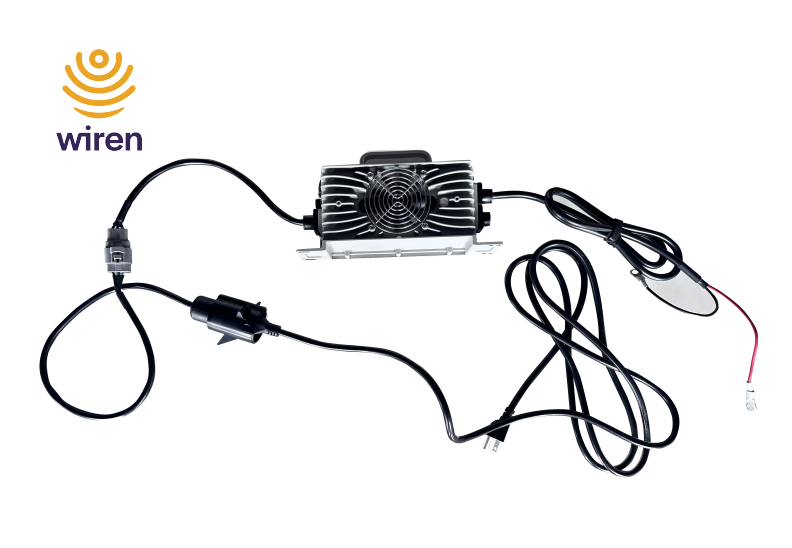
2. Do I Have to Change the Charger?

Conclusion: Yes — this is non-negotiable.

This is the single most critical step in any lithium conversion.

Lead-acid chargers use a three-stage profile (constant current → constant voltage → float charge). Lithium batteries do not require a float stage, and the charge termination voltages are significantly different:

Battery Type 48V System Charge Termination Voltage
Lead-Acid 57.6V – 60V
Lithium (LiFePO₄) 54.6V – 58.4V

Using a lead-acid charger on a lithium battery will, at best, result in under-charging and reduced lifespan. At worst, it will cause overcharging, thermal runaway, and even fire.

You must use a dedicated lithium CC/CV charger. Ideally, choose one with communication capability to allow dynamic charge parameter matching with the BMS.


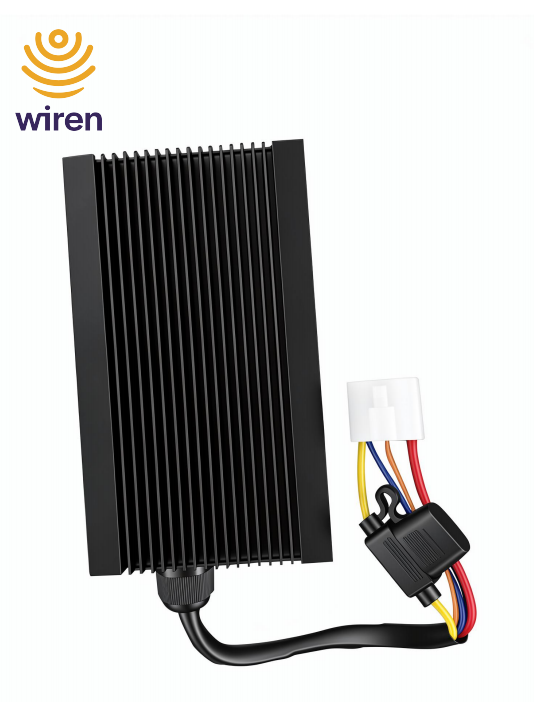
3. Do I Need a DC-DC Converter?

Conclusion: Yes, if your cart has any 12V accessories.

The vast majority of golf carts have a 12V electrical system powering:

  • Headlights and taillights

  • USB charging ports

  • Horns

  • Bluetooth speakers

  • Dash gauges

A lithium battery pack outputs 36V or 48V DC. Connecting 12V accessories directly to this voltage will instantly destroy them.

A DC-DC converter steps down the main battery voltage (36V/48V) to a regulated 13.8V (the standard for 12V systems), while providing overcurrent and short-circuit protection.

Selection guideline: Use a 20A–30A converter. Install a fuse on the input side, and connect the output to a 12V fuse block for distribution to individual accessories.

4. Do I Need to Replace the Solenoid?

Conclusion: Strongly recommended.

The solenoid is the main DC contactor that connects the battery to the controller. The original solenoid's coil voltage (36V or 48V) is electrically compatible, but two risks remain:

  1. Contact wear — Old solenoid contacts may be worn and unable to handle the higher sustained current a lithium battery can deliver

  2. Control logic changes — Some lithium conversions require the solenoid coil to be driven by a BMS signal rather than directly by the key switch

Common failure modes reported on forums include: contacts welding shut (causing inability to disconnect power) and coil burnout (causing complete failure to start).

Recommendation: Install a new solenoid rated for the same coil voltage as your battery pack, with a continuous current rating at least as high as your controller's maximum.


5. Do I Need Additional Fuses?

Conclusion: Yes — two layers of protection are required.

A lithium battery can deliver much higher short-circuit current than a lead-acid battery. If the main cable chafes against the frame, without a fuse, the result is immediate cable fire.

At a minimum, install two levels of fusing:

Location Fuse Type Rating Recommendation
Battery positive main output Class T or ANL 125% of continuous current (e.g., 125A–150A for 100A continuous)
DC-DC converter input AUTO or Mini ANL 1.25 × converter rating (e.g., 40A for a 30A converter)

Important: Do not use cheap automotive audio fuses — their interrupt speed is too slow to provide effective protection.


6. Do I Need a Contactor?

Conclusion: Yes — and a contactor is the same type of device as a solenoid.

In the golf cart conversion context, "solenoid" and "contactor" are often used interchangeably. Both refer to a relay that uses a low-voltage control signal to open or close the high-voltage main circuit.

In a lithium conversion, the contactor serves one critical function: when the BMS detects an abnormal condition (over-discharge, over-charge, over-temperature, etc.), it cuts the 12V control signal, causing the contactor to open and physically isolate the battery from the rest of the system. This is the final execution device that makes BMS protection real.

Selection guideline: Choose a contactor with a coil voltage matching your battery pack (e.g., a 48V coil for a 48V battery) and a contact current rating at or above the controller's continuous rating.


Frequently Asked Questions (FAQ)

Q: My golf cart has no headlights. Do I still need a DC-DC converter?
A: Any 12V device — including USB ports, horns, or gauges — requires a DC-DC converter. If your cart has absolutely no 12V accessories, then you can skip it. But most carts do.

Q: Can't the battery's built-in BMS replace external fuses?
A: No. The BMS provides electronic protection (over-current, over-voltage, over-temperature), but its internal MOSFETs can fail short under extreme surge currents. A physical fuse is the last line of defense and cannot be omitted.

Q: How much more range will I get after a lithium conversion?
A: For the same rated capacity, lithium delivers 30%–50% more usable Ah than lead-acid (due to the Peukert effect, which severely reduces lead-acid capacity at high discharge currents). The additional weight reduction of 200–300 lbs further extends range.


Recommended Products

Wiren Shenzhen Co., Ltd.